Understanding Mold Remediation: What Homeowners & Businesses Should Expect
Mold is more than just a musty smell or a few black spots on the wall. Left unchecked, it creeps silently through homes and businesses—damaging property and raising health concerns. At Black Mold Fix, we know how stressful it is to face mold, especially when you’re not sure what will happen next or how to protect what matters most.
Whether you're a homeowner or a business manager, understanding the mold remediation process can help you breathe easier. We’re here to guide you—step by step—so you know what to expect, how to prepare, and how to ensure lasting results.
Inspection & Assessment 🕵️
The journey always begins with a thorough inspection. Like detectives searching for hidden clues, certified professionals use their eyes—and their tools—to uncover the full story. Mold isn’t always visible. Sometimes it hides behind drywall, under flooring, or inside HVAC ducts.
Here’s what to expect during the inspection:
- Visual checks: Every nook and cranny is examined—basements, crawl spaces, attics, and behind appliances.
- Moisture mapping: Using moisture meters, pros detect damp areas where mold likes to hide.
- Air and surface sampling: Mold spores are microscopic. Testing the air and surfaces helps pinpoint the type and extent of contamination.
- Health risk assessments: Some molds can trigger asthma, allergies, or more severe reactions, especially in sensitive individuals.
- Documentation: The team creates a detailed report, including photos and findings, to map out a remediation plan.
Tip: Always hire a company with industry certifications, like IICRC or National Organization of Remediators and Mold Inspectors (NORMI). These standards ensure safe and effective methods.
Containment & Removal
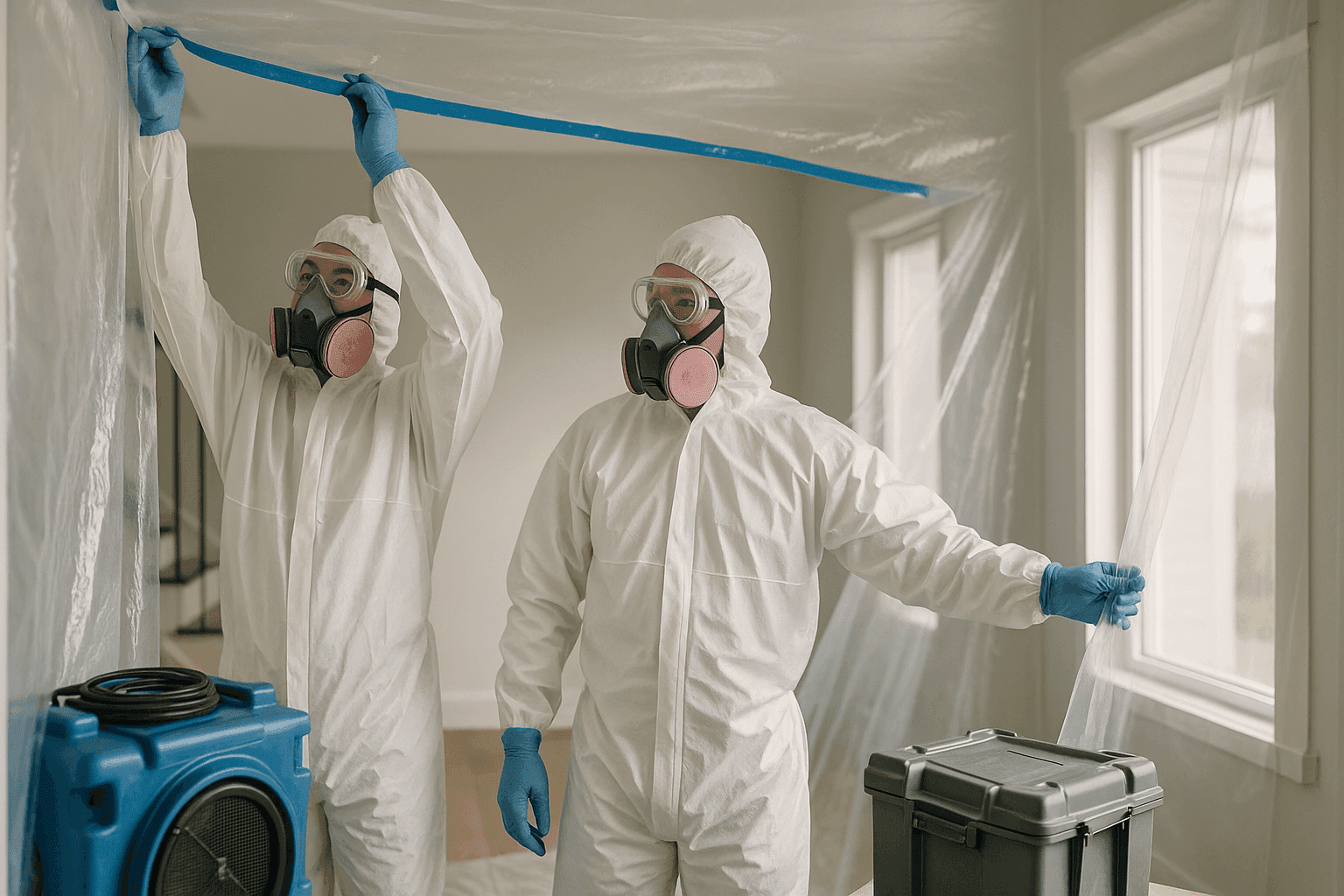
Think of containment as building a dam to stop a flood. Before any cleaning begins, professionals set up barriers—usually heavy plastic sheeting and negative air machines—to keep mold spores from drifting into clean areas.
Key steps in containment and removal:
- Sealing off work zones: Doors, vents, and openings are sealed. Air scrubbers create negative pressure, pulling spores out instead of letting them escape.
- Protective gear: Full-body suits, gloves, and respirators are standard to keep technicians safe and prevent cross-contamination.
- Removal of damaged materials: Everything affected—drywall, insulation, carpet—may need to be carefully bagged and taken away.
- Safe disposal: Materials are disposed of according to EPA and OSHA regulations, protecting your property and the environment.
Tip: If you see workers skipping protective gear or containment, that’s a red flag. Proper procedures matter.
Cleaning & Restoration 🧹
Once the visible mold is gone, cleaning goes deeper. This is more than just wiping down surfaces—think of it as deep cleaning after a kitchen fire, not just sweeping up ashes.
What’s included in the cleaning phase:
- HEPA vacuuming: Special vacuums trap tiny spores from floors, walls, and even the air itself.
- Antimicrobial treatments: Approved solutions are applied to prevent regrowth.
- HVAC cleaning: Mold can travel through ducts, so professionals clean or replace filters and may treat the entire system.
- Odor removal: Air scrubbers and deodorizing agents help clear out any lingering musty smells.
- Building material replacement: Damaged drywall, flooring, or insulation is replaced as needed, restoring the structure.
Tip: Ask about cleaning methods. The CDC and EPA offer clear guidelines on what’s safe and effective for mold cleanup.
Verifying Mold-Free Results
How do you know the job is truly done? That’s where post-remediation testing comes in. Like a final exam, this step ensures your space is safe for everyone.
Post-remediation steps include:
- Air quality testing: Professionals use calibrated pumps to sample air in multiple rooms, checking for mold spores.
- Surface sampling: Swabs or tape lifts confirm that no hidden colonies remain.
- Clearance documentation: A written report details results and certifies the area as clean.
- Walkthrough with the client: You’ll be shown the work areas, and any remaining repairs or recommendations will be discussed.
Tip: Always request independent post-remediation testing. It’s your best assurance that the problem is fully resolved.
The Importance of Certified Professionals
Mold remediation isn’t a job for amateurs. Certified technicians follow strict protocols, use specialized equipment, and understand the science of building materials, air flow, and moisture control.
Why certifications matter:
- Up-to-date training: Standards change as new research emerges. Certified pros stay current.
- Compliance: Following EPA, OSHA, and local building codes keeps everyone safe—and protects your investment.
- Insurance assistance: Many policies require documentation from certified companies for claims related to water or mold damage.
Tip: Ask to see credentials and references before work begins.
What Clients Should Prepare For
Remediation can be disruptive, but good planning minimizes surprises.
- Access: Technicians will need clear paths to affected areas.
- Temporary relocation: In some cases, you may need to leave the property for a day or more—especially during intensive cleaning or if sensitive individuals are present.
- Securing valuables: Move breakables or valuables away from work zones.
- Communication: Keep lines open with your remediation team for updates and questions.
Ensuring Thorough Results
Mold is sneaky. The best results come from a team that leaves no stone unturned.
- Check for moisture sources: Fix leaks or drainage issues to prevent recurrence.
- Address ventilation: Proper airflow helps keep spaces dry.
- Schedule follow-ups: Routine inspections catch problems before they grow.
Tip: Consider services like Basement Waterproofing near you or crawl space encapsulation as preventative steps.
Practical Tips for Home and Business Owners
- Don’t ignore musty smells—they often signal hidden mold.
- Act fast after water damage—the first 24–48 hours are critical.
- Check HVAC systems regularly for condensation or dust buildup.
- Maintain gutters and downspouts to direct water away from your building’s foundation.
References
- Centers for Disease Control and Prevention (CDC): Guidelines for mold cleanup and health risks.
- Environmental Protection Agency (EPA): Mold Remediation in Schools and Commercial Buildings.
- Occupational Safety and Health Administration (OSHA): Worker safety protocols during remediation.
Frequently Asked Questions
How long does mold remediation take?
It depends on the size and severity of the problem. Small jobs may take a day or two. Larger projects, especially those involving structural repairs, can take a week or more.
Will mold come back after remediation?
If moisture issues aren’t fixed, mold can return. That’s why moisture control and preventative maintenance are just as important as removal.
Can I stay in my home or business during remediation?
Sometimes, yes. But if the contamination is widespread, or if there are health concerns, temporary relocation might be necessary.
How do I know if I need professional help?
If you see more than a few square feet of mold, or if you smell musty odors that you can’t trace, it’s time to call the pros.
Local and Seasonal Considerations 🌧️
Mold loves moisture. In many regions, spring rains or summer humidity can cause spikes in mold growth—especially in basements or crawl spaces. After floods or severe storms, it’s especially important to check for hidden moisture and act quickly.
Tip: Regular home inspections and Basement Waterproofing near you can help guard against seasonal mold outbreaks.
Mold doesn’t have to take over your space—or your peace of mind. If you suspect a problem, or need help with prevention, we’re here to walk you through every step.
Call Black Mold Fix now — or reach us anytime at 888-892-6857 .