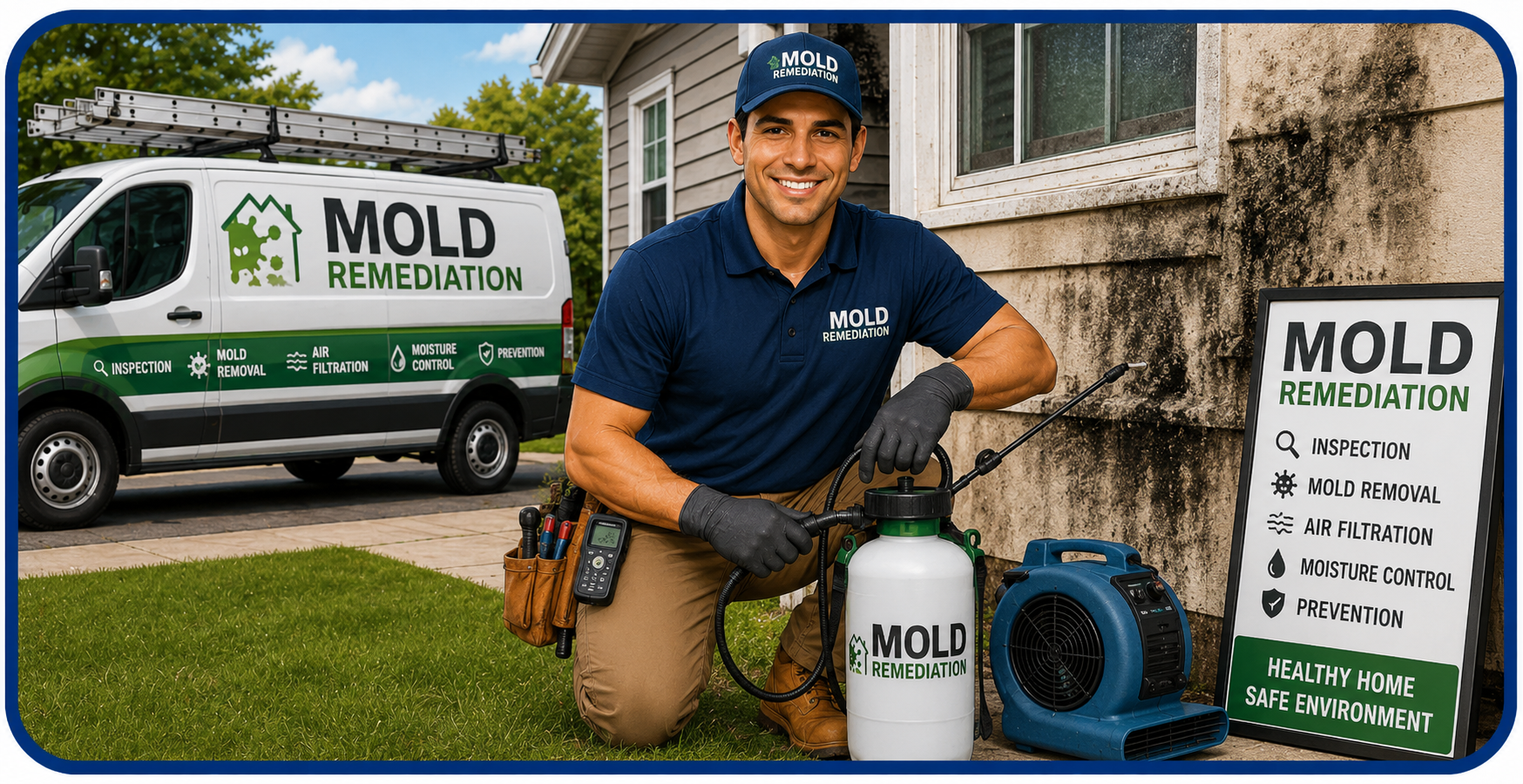
Black Mold Remediation in Cocoa, FL
Black, slimy growth on drywall after a slow leak is not a weekend project. One call connects you with an independent, licensed and insured Cocoa specialist who sets up full containment, removes the contaminated material, and fixes the water problem that fed it.
- Full containment with negative air on every job
- Licensed and insured independent local pros
- Written scope and price before demolition
- Clearance testing available on request
Black Mold: What It Is and Why It Calls for Professional Removal
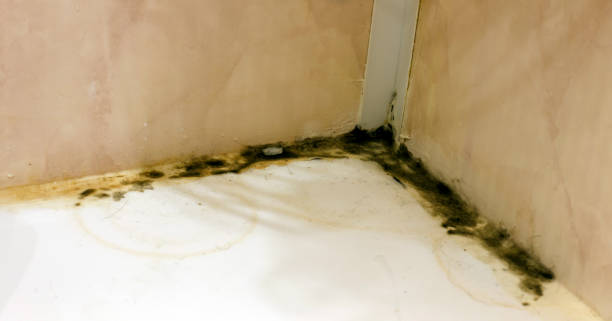
The species most people mean by black mold is Stachybotrys chartarum. It is a slow grower that needs materials to stay wet for a long time, usually a week or more, and it feeds on cellulose: the paper face of drywall, ceiling tile, cardboard, and wood. That is why it tends to show up behind a dishwasher that has dripped for months, under a sink cabinet floor, or on the back of drywall below a leaking window. Fresh growth often looks dark greenish-black and slimy. Older colonies dry out and turn powdery, which is when they release the most spores if disturbed.
You cannot identify a species by color alone. Plenty of harmless-looking molds are dark, and a tape-lift sample sent to a lab is the only way to know for sure. But the response does not change much: when there is dark growth across more than about 10 square feet, the EPA recommends trained professionals, and the IICRC S520 standard treats that area as needing containment, removal, and verification. The contractors we connect you with treat these jobs as heavy-condition work, with airlocks, respirators, and bagged demolition.
Spraying bleach and painting over it is the most common mistake we hear about. Bleach does not penetrate drywall paper, the extra moisture can feed regrowth, and paint traps the problem until the stain bleeds back through.
Why Choose Our Specialized Black Mold Remediation in Cocoa, FL
Black mold jobs reward patience and punish shortcuts. Here is what you should expect from the specialist we connect you with.
Licensed and Insured Pros
The independent contractors we route these calls to are expected to carry liability and workers' comp coverage plus whatever license your state requires. Ask for certificates before work begins.
Clear Pricing Before Demolition
Expect an itemized estimate covering containment, demo, HEPA cleaning, drying, disposal, and any rebuild. If opening the wall reveals more growth, a good contractor stops and shows you before changing the price.
Fast Response From Local Crews
Because contractors are local to Cocoa, active leaks with visible growth are often seen the same day. The dispatcher tells you a realistic window before you hang up.
Heavy-Condition Equipment
Proper black mold work uses HEPA scrubbers, negative air verified with a manometer, 6-mil poly with zipper doors, P100 respirators, and disposable coveralls.
Specialized Black Mold Solutions Available in Cocoa
These are the building blocks of a black mold job. The contractor will match them to what the inspection shows.
Full Containment and Airlock Setup
The work zone is sealed with 6-mil poly before anything is cut, HVAC openings are taped off, and a decon chamber goes up at the entrance. A negative air machine exhausts HEPA-filtered air outside so spores move into the containment, never out of it.
Bagged Removal of Affected Building Materials
Affected drywall, insulation, trim, and pad are cut out, lightly misted to control dust, and double-bagged inside the work zone. Common practice is to cut at least 12 to 24 inches past the last visible growth, guided by moisture readings.
Structural Cleaning With HEPA and Damp Wipe
Framing and subfloor get HEPA vacuuming, brushing or sanding where stained, an antimicrobial damp wipe, and a second HEPA pass. Some crews finish with a clear encapsulant on cleaned wood.
Water Source Tracing and Correction
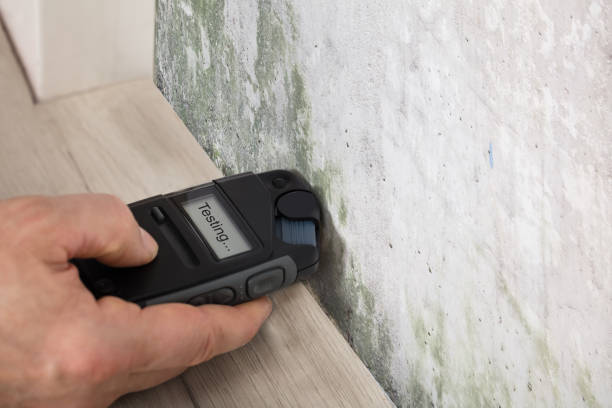
Stachybotrys almost always points to a long-term water source. The contractor traces it with a pin meter and thermal camera, whether it is a supply line, a drain joint, failed window flashing, or condensation, and either repairs it or documents exactly what another trade needs to fix.
Drying the Structure to Normal Levels
New drywall should never go over damp framing, or growth returns. LGR dehumidifiers and air movers run inside the containment, and the contractor logs daily readings so you can see the progress.
Post-Remediation Clearance Support
When the work is done, a visual inspection should find no dust or debris, and many owners add air sampling by an independent assessor. Clearance is your documentation that the job was finished properly, which matters a lot if you ever sell.
How a Black Mold Remediation Call Works, Step by Step
This is how a typical black mold call moves from first ring to a dry, verified wall.
Call Our Dispatch Line
Call +1-844-692-0486, tell us what the growth looks like and whether there was a leak, and we route you to a local specialist.
Rapid Mobile Arrival
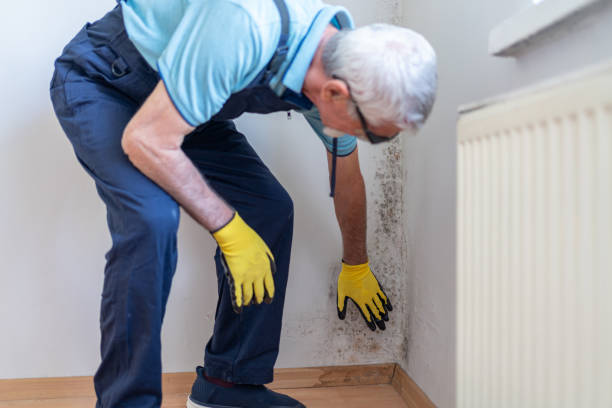
The contractor comes out with moisture meters, a thermal camera, and the supplies to isolate the area right away if needed.
Expert Assessment and Quote
You get a moisture map, photos, and a written scope with price for containment, removal, cleaning, and drying.
Cleanup With a Final Check
Work is done under containment, the structure is dried, the leak is corrected, and the job closes with inspection and optional clearance.
What Black Mold Remediation Calls Look Like in Real Life
These are the kinds of situations our dispatchers route every week, and how the independent contractors handled them.
The months-long dishwasher drip
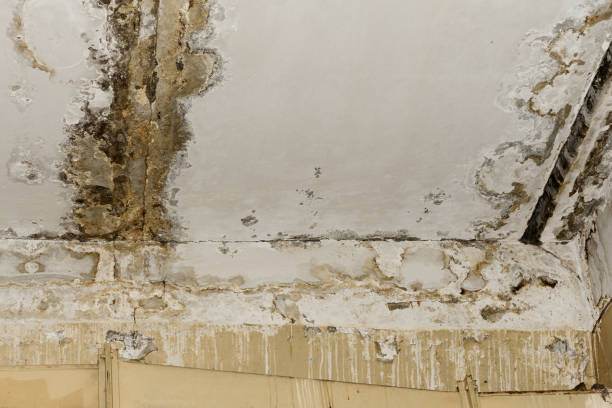
A homeowner pulled out a dishwasher to replace it and found the drywall behind it covered in black, slimy growth, with the subfloor soft underfoot. The drain hose clamp had been weeping for months. The contractor contained the kitchen corner, removed the wall section and a strip of subfloor, and dried the joists for three days.
Outcome: the area passed independent clearance, and the new dishwasher went in on a dry, sound floor.
The rental bathroom wall
A property manager got a tenant complaint about a smell in the hall closet. The contractor's thermal camera showed a cold band behind the tub wall, and a pin meter read saturated drywall. Opening the wall revealed dark growth across two stud bays from a failed tub spout connection.
Outcome: the plumber fixed the connection, the bays were cleaned and dried, and the manager had photos and readings for the file.
The window that leaked for years
A family repainting a bedroom noticed the paint under a window kept bubbling. Under the drywall, the bottom plate and sheathing were stained black. The window had never been properly flashed.
Outcome: the contractor removed and treated the affected framing, the window was reflashed, and the wall was rebuilt after drying.
Black Mold Remediation Questions, Answered
Honest answers to the questions we hear most about this service.
How do I know if it is really black mold?
The only way to know the species for certain is a lab test, usually a tape lift or swab sample. Many molds look dark. That said, if the growth is large, sits on wet drywall, and came from a long leak, the removal approach is the same regardless of the exact species, so many owners skip species testing and spend the money on the fix.
Is black mold dangerous to my family?
For sensitive people, including kids, older adults, and those with asthma, mold exposure can trigger allergy and breathing symptoms. Stachybotrys gets attention because it can produce mycotoxins, but the research on household exposure is still debated. If anyone in the home has symptoms, talk with a doctor, and keep people away from the area until it is contained.
Can I stay in my house during black mold remediation?
Usually you can stay home. With proper containment and negative air, the work area is isolated from the rest of the house. For large jobs near bedrooms, or homes with infants or people with lung conditions, the contractor may suggest staying elsewhere for a few days. Ask them to explain their containment plan.
Why can't I just use bleach on black mold?
On porous materials, bleach mostly bleaches the color while the growth below survives. It also adds water, which can encourage regrowth, and the fumes are harsh in enclosed spaces. Industry standards call for physical removal of contaminated porous materials, not chemical treatment alone.
How much does black mold remediation cost in Cocoa?
Price comes down to the size of the affected area, how much has to be removed, and access. A single wall section might be in the hundreds to low thousands of dollars, while a whole room or basement can cost more. The contractor gives you a written estimate after inspecting, and the referral call is free.
Will black mold come back after remediation?
It should not return if the leak is corrected and the framing is dried properly. Mold needs moisture to grow. Most callbacks happen when a leak was not found or new drywall went over damp framing, which is why a good contractor logs moisture readings before closing anything up.
Where We Connect You With Black Mold Remediation Pros in Cocoa
Black mold calls come in from every part of Cocoa and its suburbs, older homes with original plumbing and newer subdivisions alike. The independent contractors we connect you with work locally, so follow-up visits for drying checks and clearance are quick to schedule.
Homeowners, landlords, and property managers in Cocoa can call any time, day or night. The zip codes and nearby cities we serve are listed below.
Call +1-844-692-0486
Before the specialist arrives
- Shut off the water source if a leak is active.
- Close the door to the room and keep kids and pets out.
- Turn off the HVAC if growth is near a return vent.
- Do not touch, scrape, or spray the growth.
- Photograph the area for your insurance company.